Start soft
Choose a first block that does not punish the beginning.
Routes
Rebua routes are not scenic detours for perfect weekends. They are workable lines through ordinary obligations: pharmacy, train, school gate, lunch break, clinic waiting room, supermarket, home. The route is judged by what it returns to the person using it, not by how impressive it looks on a map.
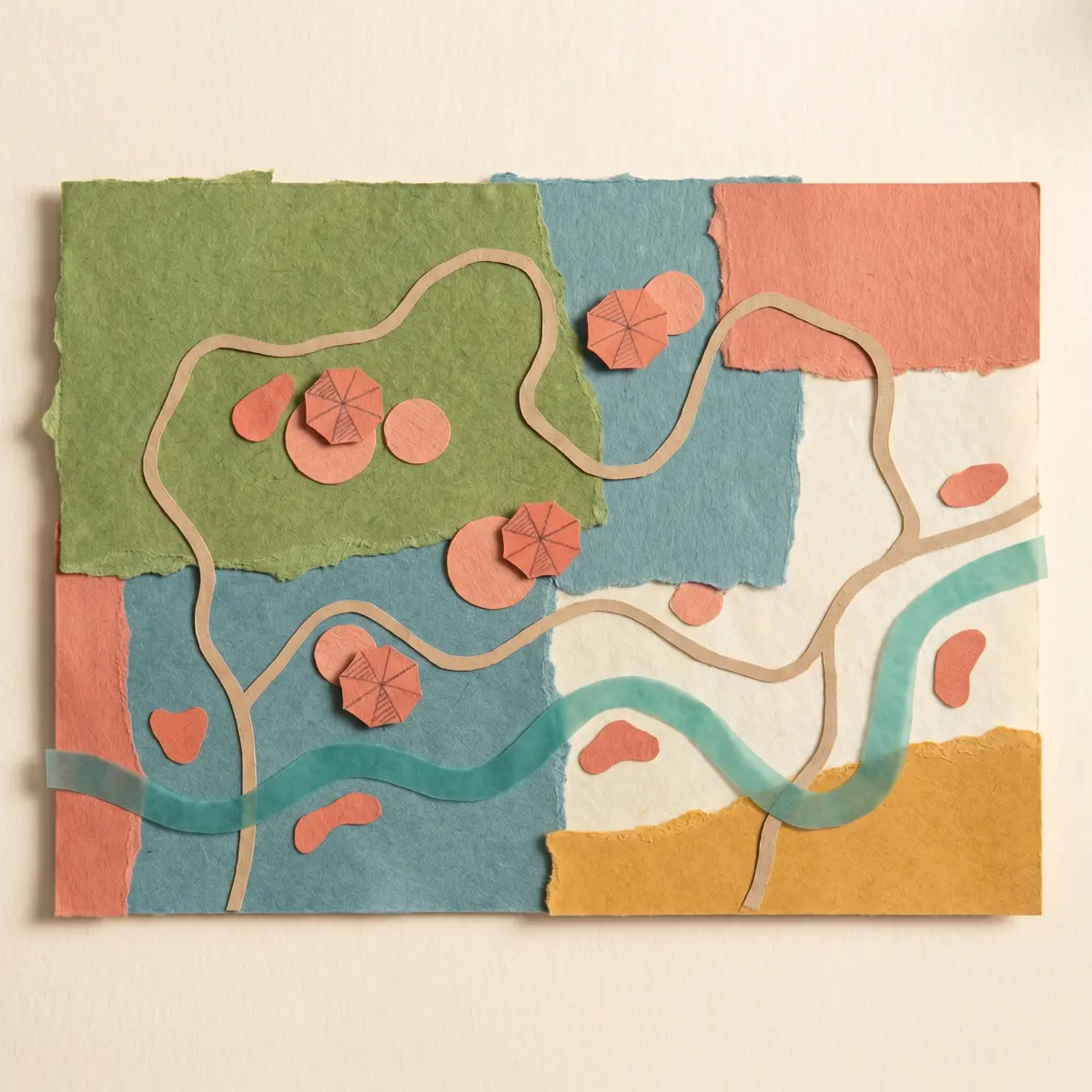
Choose a first block that does not punish the beginning.
Know where you can leave, pause, sit, or turn around.
Track shade, reflection, window brightness, and screen spill.
A route matters when it can be used again on a tired day.
The first walk is deliberately plain. No rating, no tracking, no attempt to make the route special. The second walk adds marks: one for relief, one for strain, one for shelter, one for decision load. The third pass removes a demand if possible. Maybe the route crosses later, starts on the shaded side, avoids a doorway with harsh music, or includes a bench before the final errand.
The result is a practical loop, not a lifestyle identity. A person should be able to carry it into an ordinary week and use it when energy is low. Rebua cares about those repeatable pieces because they are often the difference between abandoning a task and completing it with some steadiness intact.